I make no apologies for sharing an annual photo of my (not so photogenic) nettle soup! I do love it! Quite possibly my all time favourite soup!
I remember going out with my mum when we were wee, with a pair of pink/yellow Marigolds on, to pick nettles for soup. It’s something I did with Ronan when he was wee too, and now the tradition is continued by Malcolm and I. He is a much braver picker than I – not needing gloves, he picks the tips from below, which is supposed to alleviate a sting. (It’s not always an effective strategy!).
This year, being up in Edinburgh when the coronavirus ‘struck’, we are closer to a carpet of few flowered leek [Allium paradoxum] than wild garlic, so our first wild-harvested soup of the year is ‘nettle and few flowered leek’.
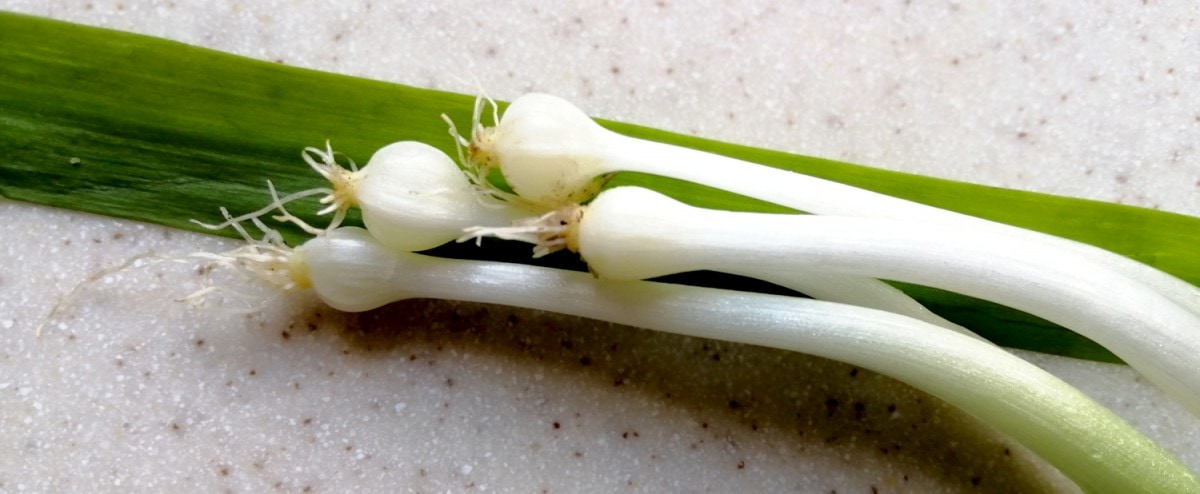
I wrote about few flowered leek last year >>here<<. In brief, it is a non-native invasive, so can be pulled up by the bulb – unlike wild garlic which is native. The leeks growth could easily be described as ‘rampant’ – it smothers the ground leaving room for nothing else… Unlike the leek, only a few leaves of wild garlic should be picked from each plant, leaving the bulbs intact to come again next year.
Interestingly, as I was roughly chopping the few flowered leek, my ‘normal’ eye was watering, but not my transplant eye!
There is a wee wooded area not far from my folks’ house which is covered in few flowered leek. It is actually just beyond best picking point, as it has started to flower. However, the stems, flowers and now-fibrous leaves still make a tasty addition to the pot! If you’re not familiar with few flowered leek, check and double check that what you’re picking isn’t snowdrops/ bluebells nor daffodil leaves – they can look quite similar, but must not be eaten!
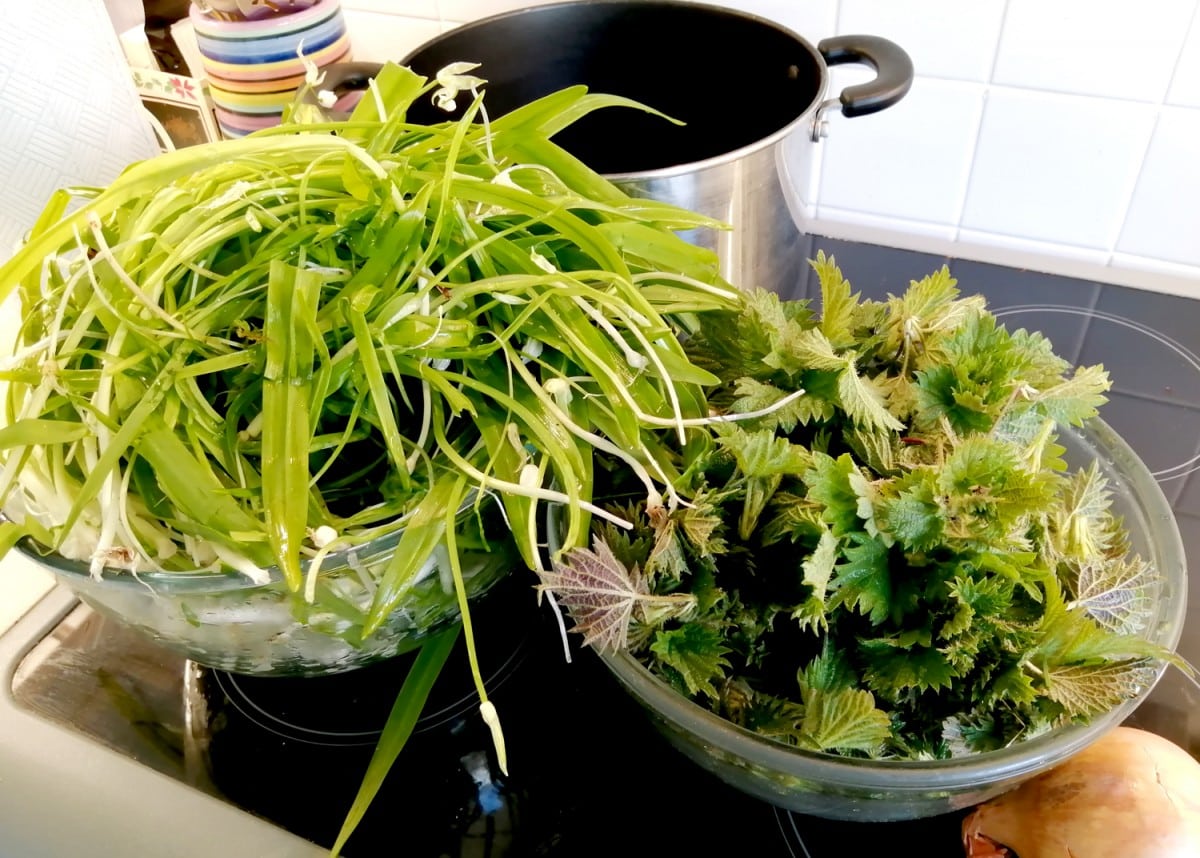
Nettles [Urtica dioica] are at the perfect picking point now. The tips and first few leaves are the best, and the plant will regenerate no bother. Nettle is an extremely beneficial plant, though you may disagree if you have it in your flower borders… Not only is it the main food-plant of the peacock butterfly (see here), it is packed full of nutrients, vitamins and minerals for us humans. It is also popular in herbal medicine. I’m quite sure my mum plastered me in some nasty tincture of nettle as a ‘cure’ for my eczema as a child. It didn’t work.
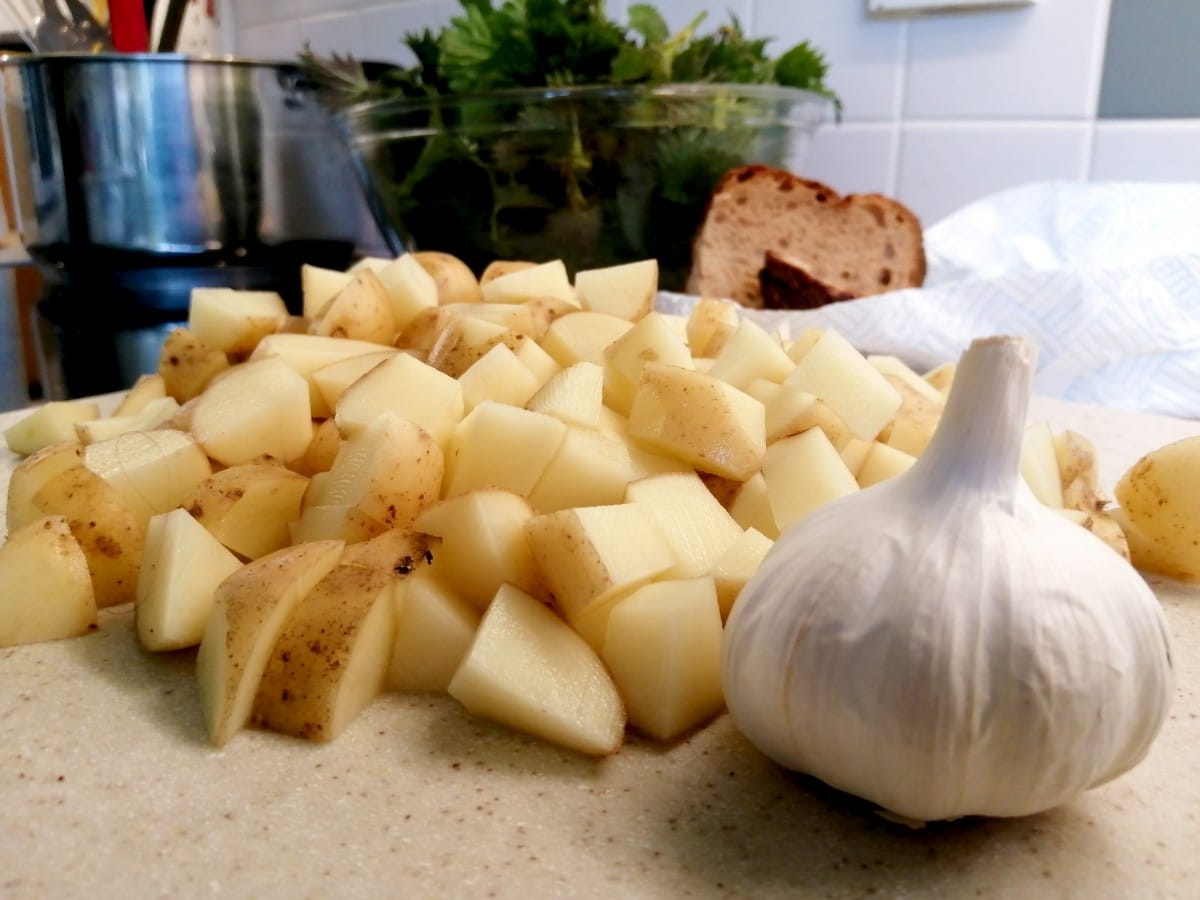
I’ve never been very good at following a recipe – and so if you’re going to make it, take my vague/ lack of measurements into account!
Ingredients:
Onion
Garlic (optional)
Few Flowered Leek (or wild garlic)
Nettles
Potatoes
Stock
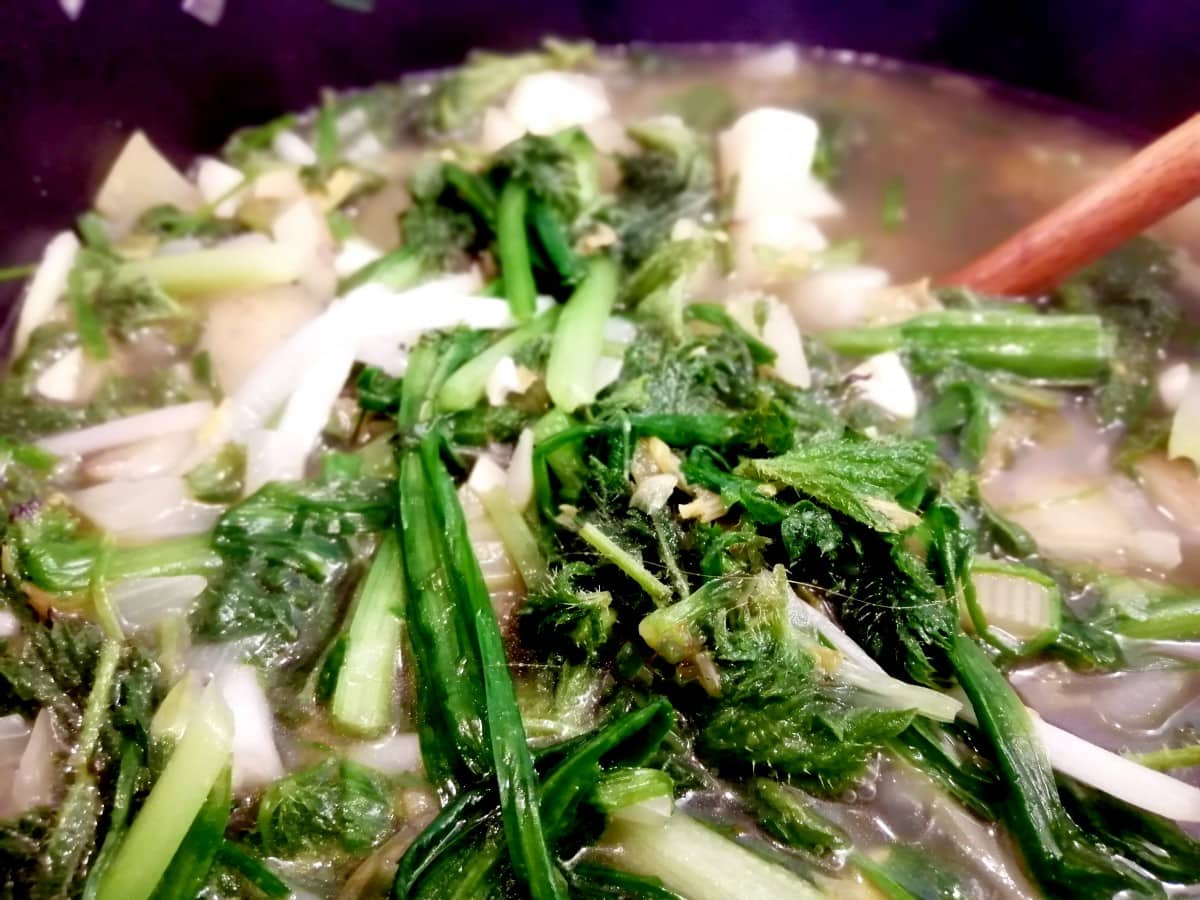
Method:
Wash/ sort/ chop/ fry/ simmer/ zap/ garnish/ serve
The first few stages are important to pick out leaves etc from your gathered ingredients. Especially if they’re e.g. bluebell leaves!
Another good point is to add the nettles and leeks near the end, partly so they don’t turn to a brownish mush, but also to retain the flavour – the leek (more-so than the garlic) is particularly delicate in taste.
I tend to garnish with a sprig or two of fresh leek/ garlic flower stems. We made some croutons from Malcolm’s dried-up homemade bread, but I forgot a blob of (non-dairy) soft cheese. You could use cream or full dairy soft cheese or anything else you fancy!
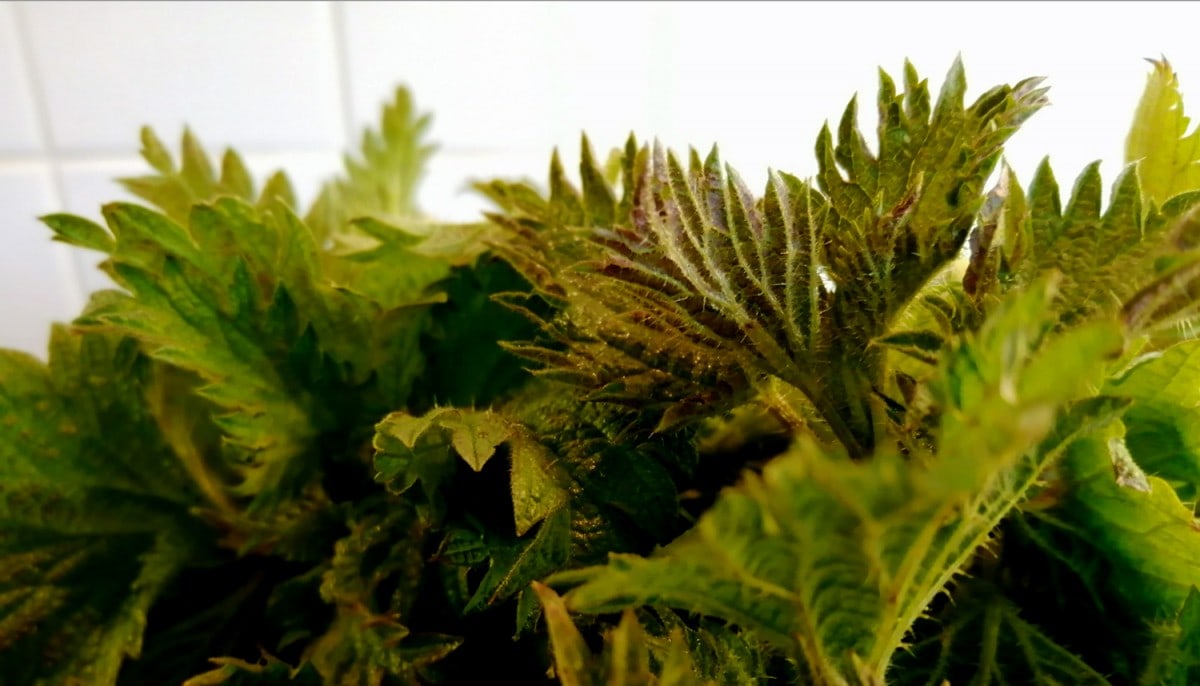
The nettle sting is lost in the cooking process, though the soup has a fabulous fragrance and slightly ‘nippy’ flavour.
I have also used nettles in stews and pasta, and it makes a deliciously good gravy too. Malcolm has dried it in his dehydrator, and along with the seeds, it is an excellent ‘earthy’ addition to all savoury dishes.
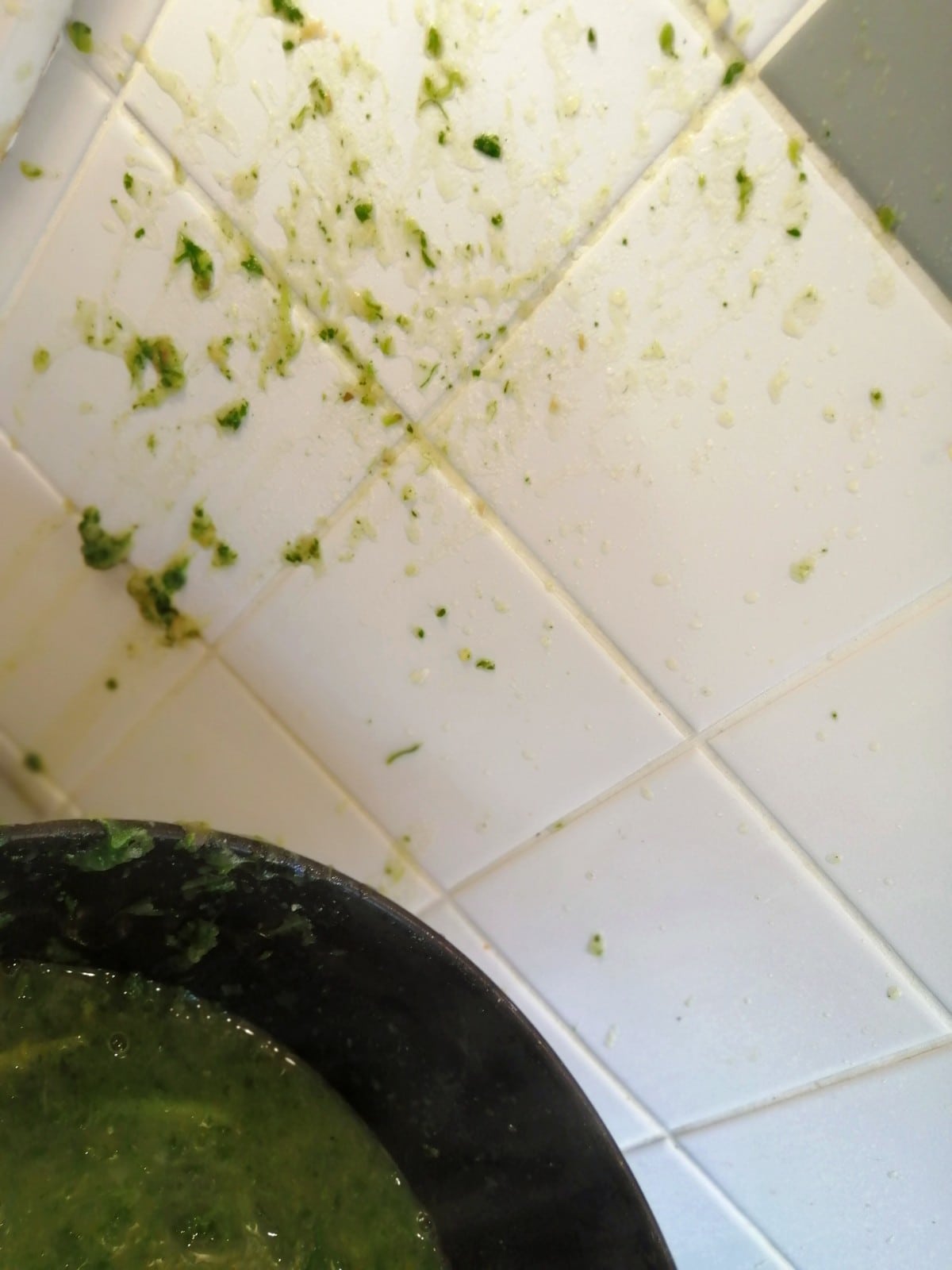
There hasn’t been a year gone by that my kitchen walls haven’t been adourned by a nettle soup splatter…