

On a respite break (from looking after my mum, thanks to my twinny), Malcolm and I have around 10 days to transform our brand-new allotment from savanna-esque bare wilderness to productive plot! (Gratitude must be paid to the generous farmer who has given over a portion of a field on his organic farm to our small community allotment team and prepared the soil for our arrival.)
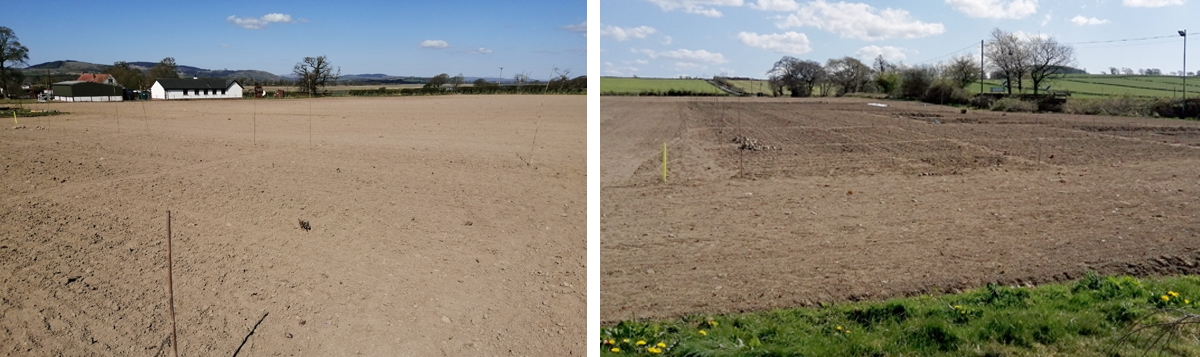
There was a fair wind from the north whipping up the dry, dusty soil on our first encounter with the freshly furrowed site. It’s good when things aren’t initially rosy, as it is a reminder that the wind doth blow, and we may still have frost… Protection will be a must!
I feel a fortress coming on!
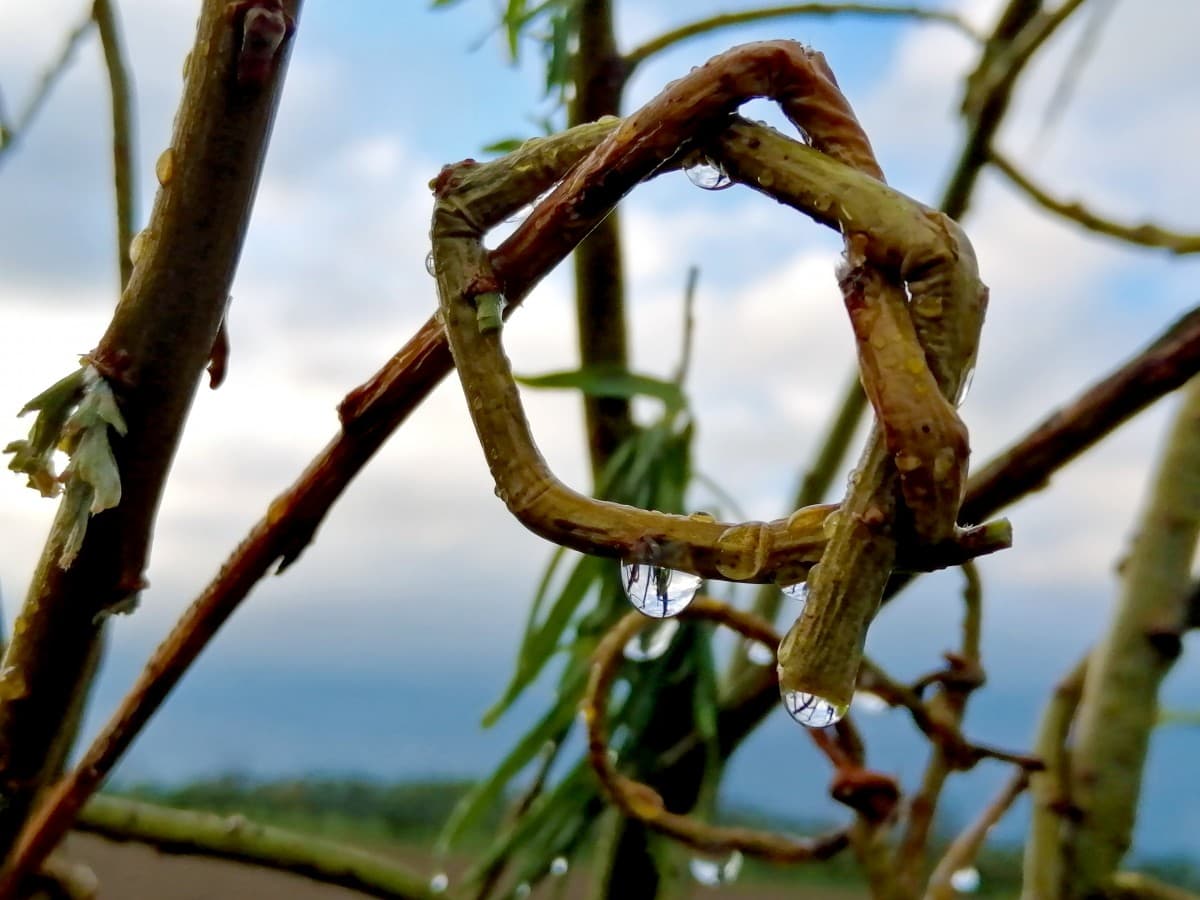
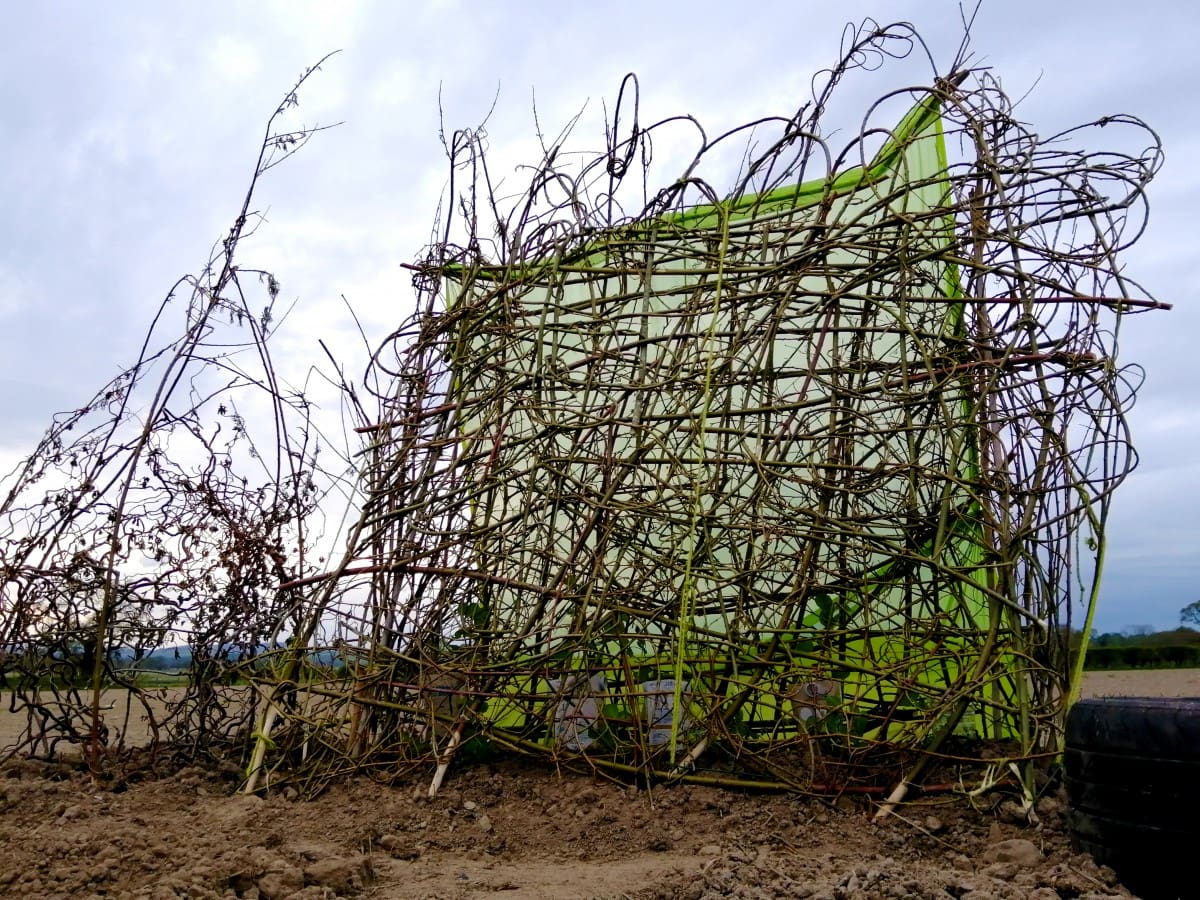
I’ve already mislaid the exact moment it happened, but I knew I needed to make a willow structure – some kind of fortified, tendrilled ‘trellis’ for my climbing mange tout and garden pea seedlings. I’ve made low fences for my garden in the past, using cut stems from my lilac and straight hazel contorta suckers. But I’ve not really worked with willow.

(I do have a distant memory, when joining a local Green Party group gathering in rural Herefordshire back in C1996, of helping to make willow wattles, and loving it!)
Sometimes things just have a way of working.
And so I found myself, head torch on, under cover of darkness, calf-deep in flood-detritus along the merse, pruning a few choice branches from one of the many willow shrub/ trees! When coppiced annually, willow will regenerate wonderfully with 5 or 6 stems of new growth from every old branch taken. There are many benefits to willow farming, not least for thwarting erosion and as flood prevention. I was told by someone wise that they are big drinkers, that’s why you see so many of them planted on riversides.
 Not a willow – but a more photogenic tree on our way to gather the willow, a typical sky from an amazing spell of lockdown April weather (River Nith in the background)
Somewhere in the back of my mind, I know that willow is profuse in propagation with a ‘tenacity to live’ which will be why there are so many growing on the regularly flooded tidal shoreline here! So, on returning home with my load, I filled a bucket with 5 kettle’s-full of boiling water, added a good dose of salt, and steeped the cut ends overnight. This in an attempt to stop it from sprouting on the allotment.
I’m not after a willow crop – yet!
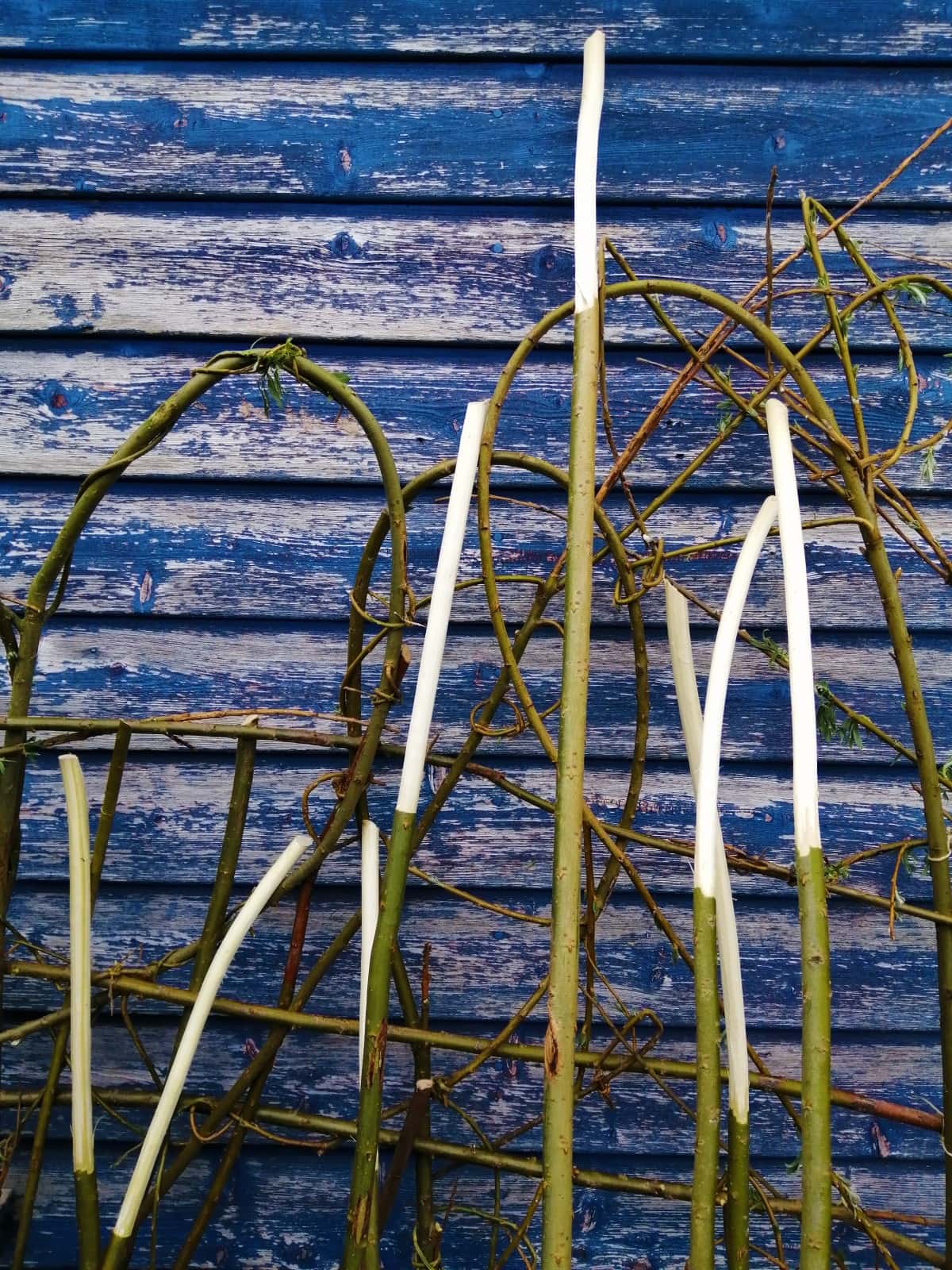
I also lightly whittled the ends – a belt and braces approach! However, the harvest of a further two successive night forays only had their barks stripped – in part experiment, part energy-saving endeavour. Had I been conducting a proper scientific investigation, I would of course have had a third stakeholder (hahah) in the trial – with boiled, but un-stripped bases.
Out of interest, the bark of the boiled branches turned brown.
As an aside, I have been chewing small pieces of the non-boiled bark. It contains salicin – the original painkiller now mass-manufactured into a chemical version commonly known as ‘Asprin’. I have toothache, and it hasn’t made it any worse! This site suggests that, “It is difficult to determine how much salicin you are getting from each piece of bark, so this method of consumption should be approached with caution”.
Back to the weft
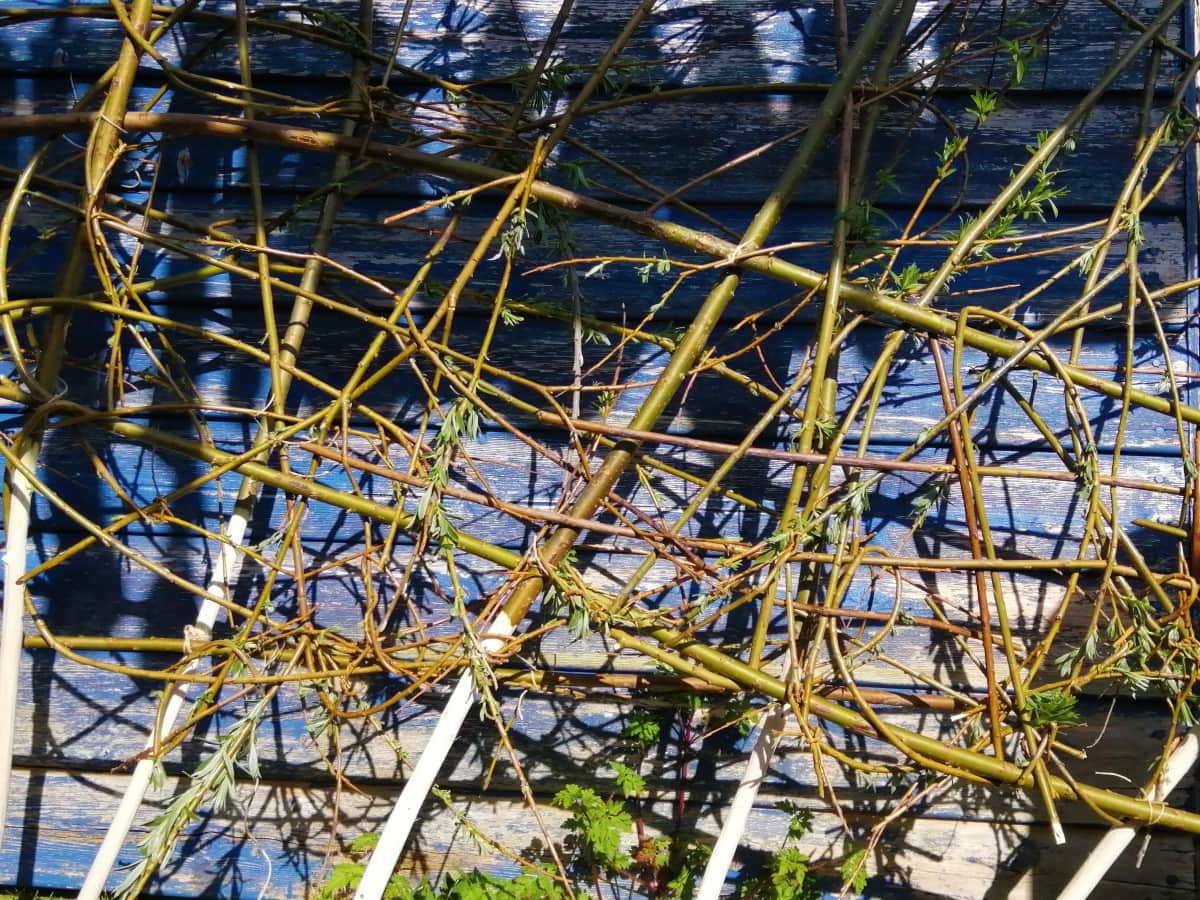
I started off by loosely weaving a skeleton of stalks, and it just grew from there! Similar to weaving with wool, the edges of my wattle warped, and it was hard, physical work at times trying to straighten the wood with fresh branches. I was acutely aware of the pressure of the grain in the young wooden stems pushing against each other. Having failed to advance beyond term one of O-Grade physics, I can only imagine that this is what gives the structure its strength!

Critical Curves
By day 3, I was onto harvesting stems from a different kind of willow. [For future reference, the 3rd nearerst tree to the village has a low snap threshold!] I can’t pretend to begin to recognise many of the 400 varieties of willow [salix] but this one had lengthier leaves compared to the shorter fronds of the previous two. They reminded me of the newspaper trees you used to make at school (not a botanical observation). Whilst not so in stature, its leaves were similar to the pendulous weeping willow [Salix babylonica]. It had a frustrating tendency to snap at critical curves where the previous twigs had arched with a more giving grace.
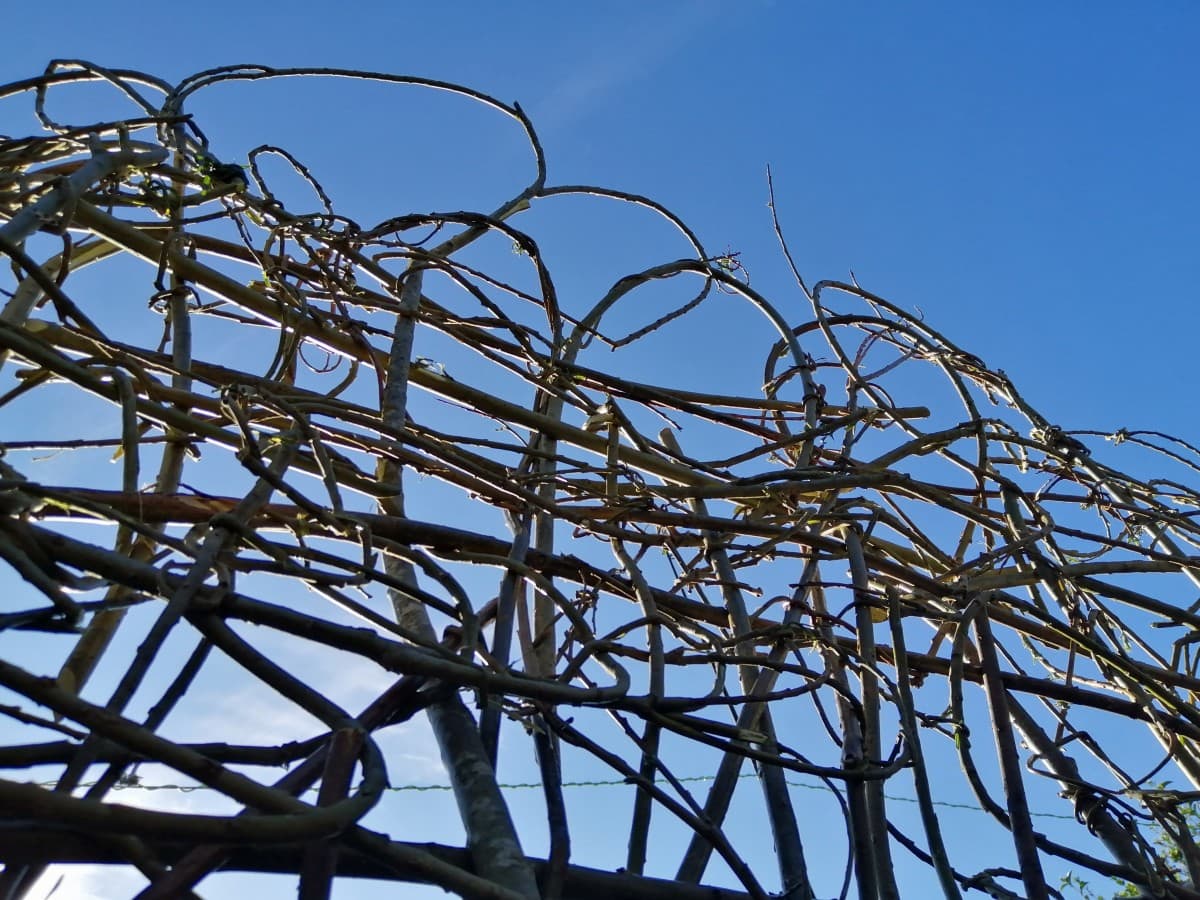
It felt like I was drawing using branches and twigs instead of pencil… I’ve never ‘been good at straight lines’! I made little ‘stories’ in small, detailed parts of the thing and got totally carried away and lost in the process. A day away and I’m itching to make more!
It doesn’t seem to depend on being able to see clearly, so there is a huge added bonus.

Working in the back garden, listening to the birds and luxuriating in the still, peace and quiet; enjoying the physical task; having a practical purpose, my mind wandered. As my hands intuitively made loose lashings, hitches and whippings (it all sounds so painful…) I realised I was drawing on my long-forgotten experiences of pioneering as a Girl Guide! Not least in using plaited twine as wind-defying ‘guy ropes’!
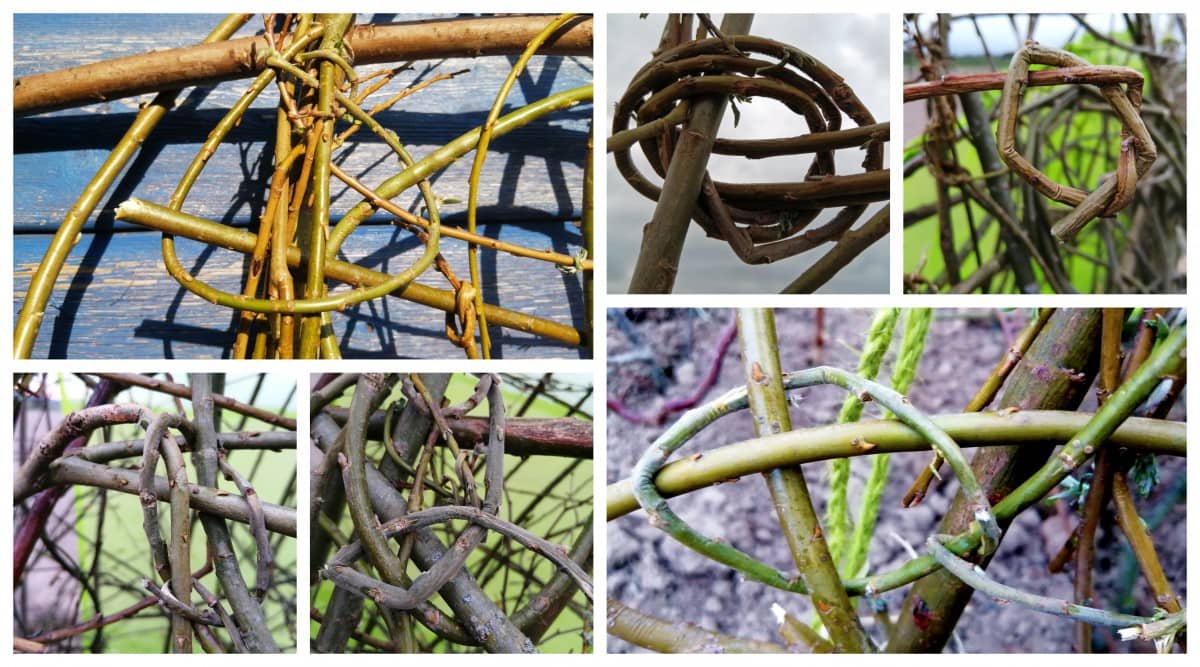 Knotty willow!
I had an amazing guide leader who had us out in the woods, making fires and camping at every opportunity. She taught us basic knots to make washstands, bedding racks and bridges. I even found long lost memories of creating string macramé plant holders!

I’m hoping that there will be children for whom the memories and life skills gained through this lockdown experience will at some point come flooding back to them, aiding their future lives!
I know it’s on an entirely different scale, but my pink wire spider project from a wee while ago also popped into my head whilst I wound/ weaved/ wove/ wuv away.
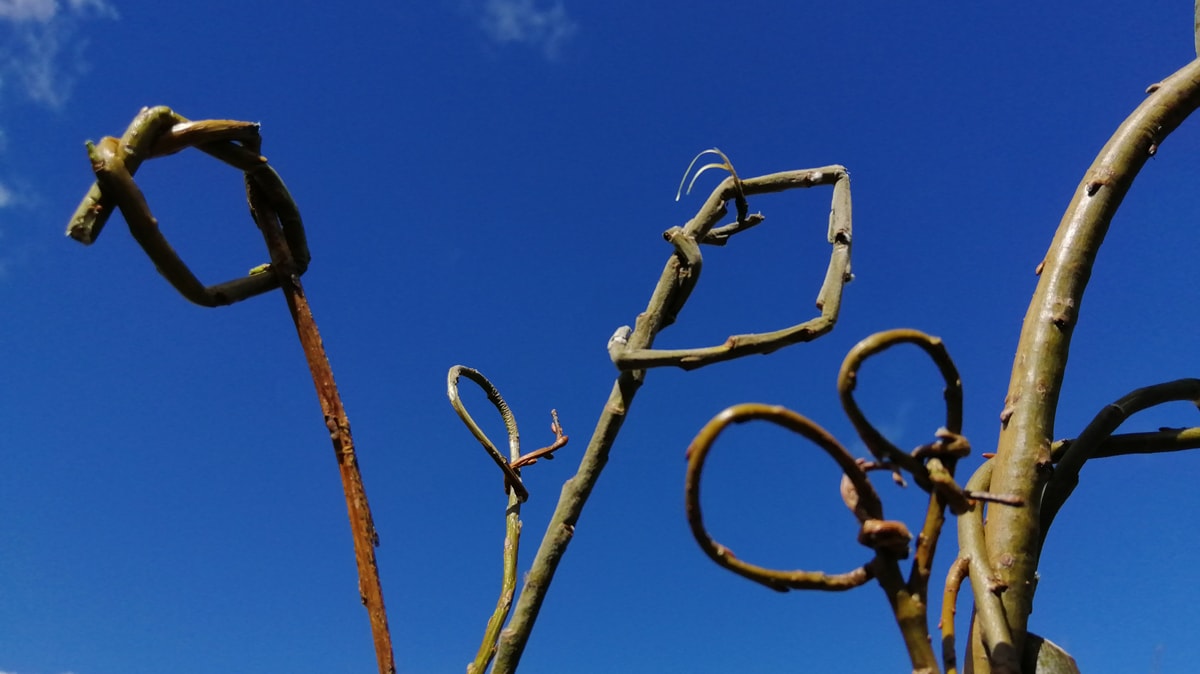
Loopy Lattice
It is still early for planting out peas. But I also know the roots will become pot bound before we’re back here again. They also won’t last without watering before being planted out… It’s a risky business!
But I do hope that my loopy lattice will provide a fair amount of protection from frost!
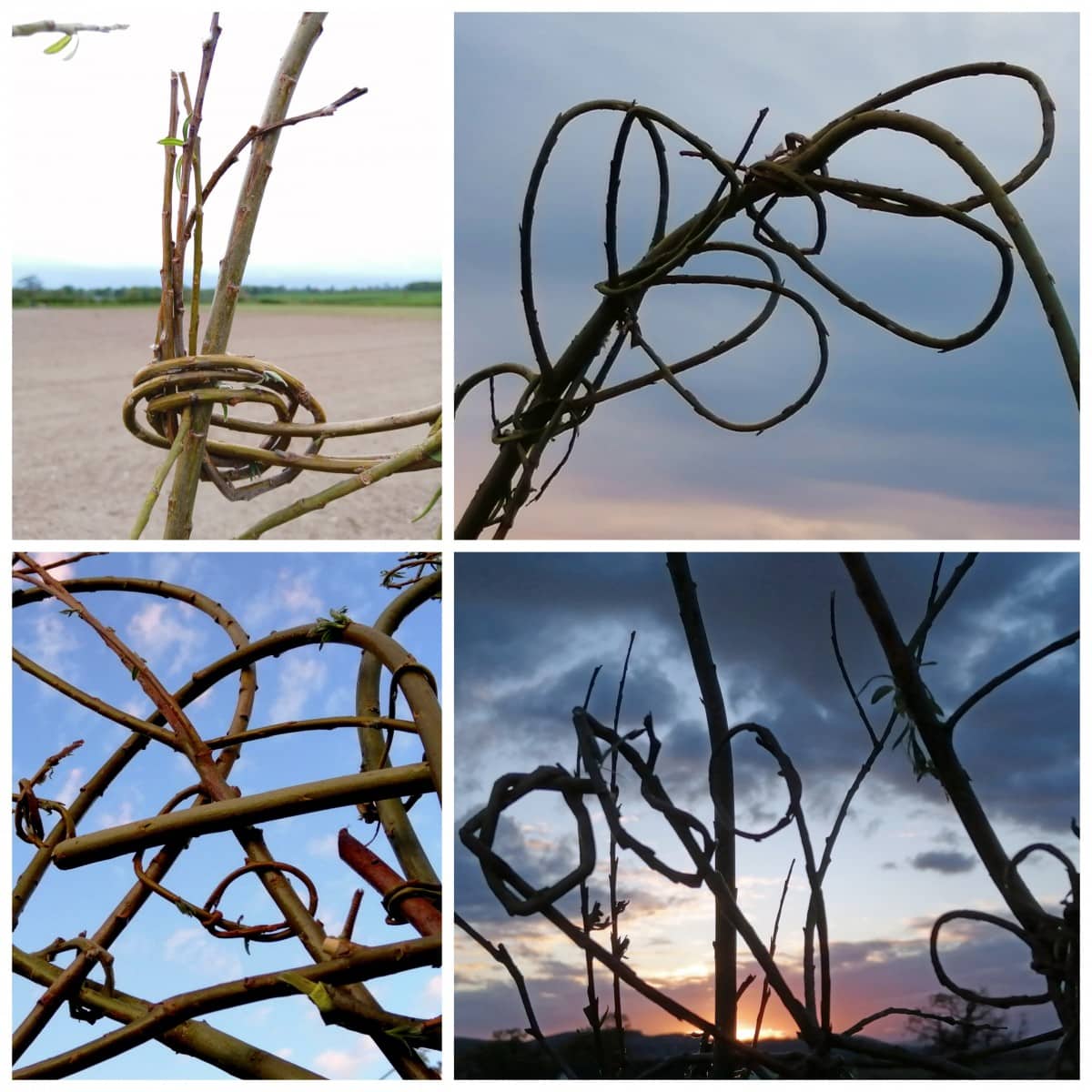
…if not deer, hare, pigeons, crows, slugs, mice and anything else that might have a beady eye on my prize croppings.
The Stakes are High
Time will tell whether the stakes will take root… I will just have to give them a bit of a rough shoogle to try and dislodge the burgeoning growth without disturbing the roots of my precious peas!
Whatever will be, I had the best time creating these fortifications. It would be good if we could make it round to the allotment before sunset. I’d like to get a photo or two in the daylight, whilst it’s still standing!
…
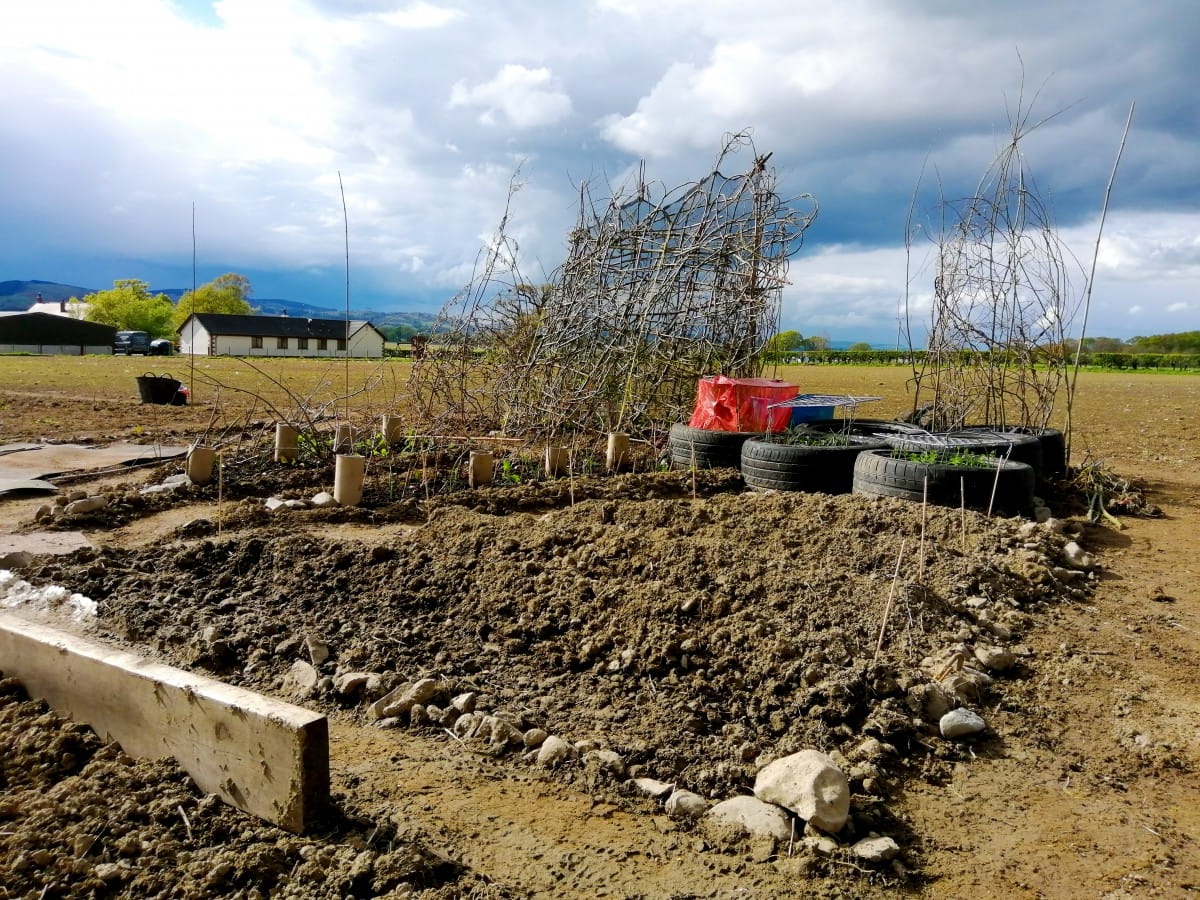
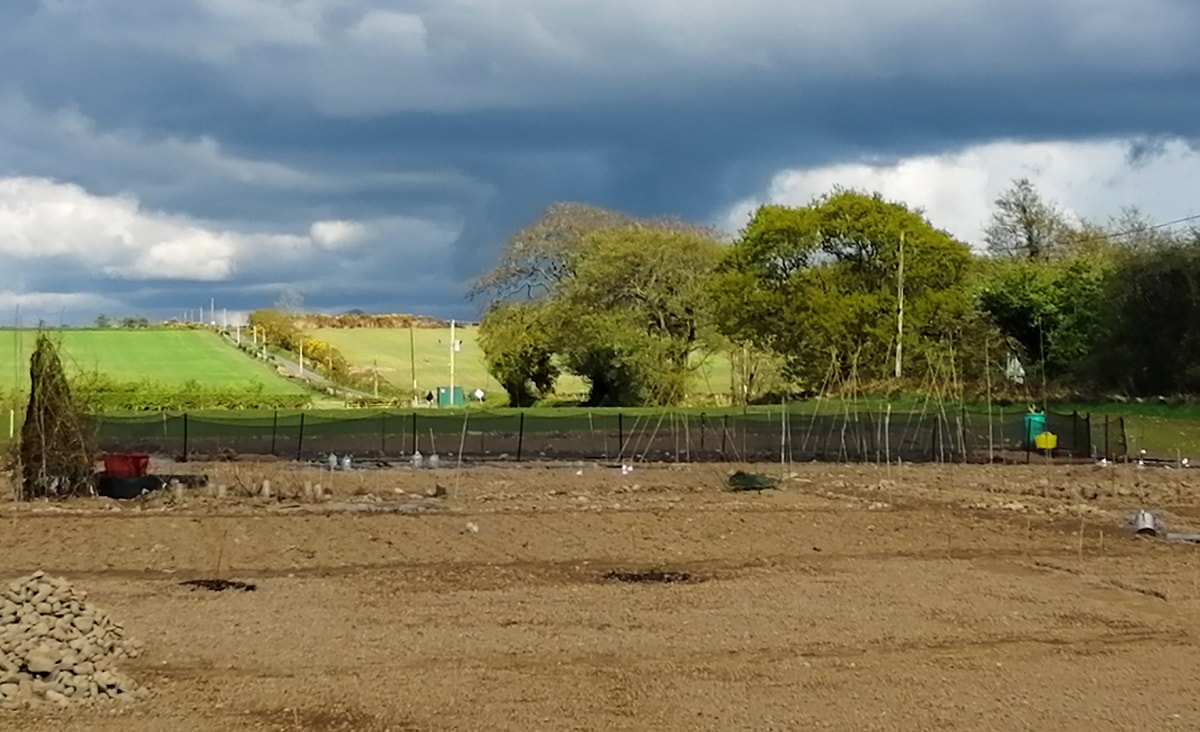
(Ours is only a wee half plot, but by the time we left, we’d still only managed to weed half of it!
I’m keen to follow the Charles Dowding ‘No Dig’ Method, but with time against us and shops closed/ supplies low, we decided to dig out the dock and dandelion, this time).
I didn’t mention the day it rained, we got soaked to the skin and chilled to the bone. It was so cold we worked with numb fingers and didn’t properly warm up till the next morning!
Lots to look forward to, next time!)