
I recently accompanied Malcolm on one of his most interesting work assignments – archaeological digs! There have been two fortnight-long digs and a conference. A geophysics survey day and laboratory testing days are still to come.
Malcolm’s client is a ‘retired’ film director – an amazing character and determined do-er. A one off. We were invited to stay with them in their lovely country home during both digs. His interest focusses on the early medieval, and in Merlin – the man behind the legend.
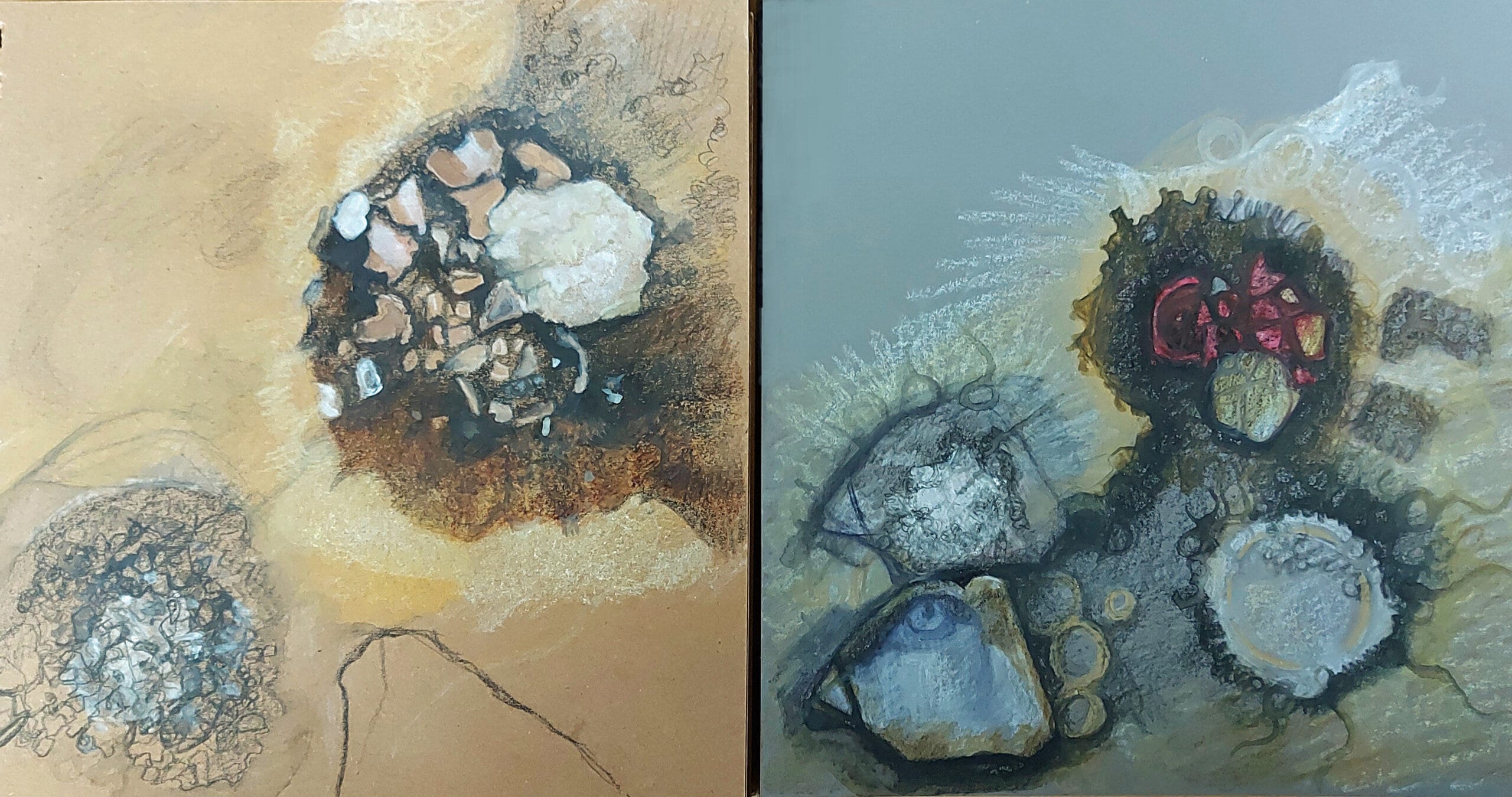
In the days following our return from this most recent dig – where we volunteered and recorded each day in a diary of words, photographs and videos – I felt the need to try to process some of the experiences. These sketchy drawings are the result of this response.
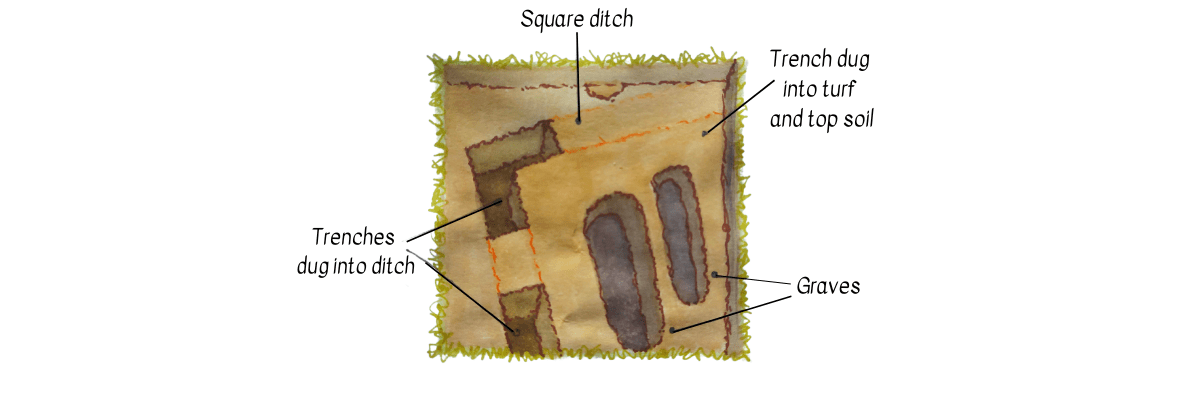
The first week saw us dig the first ever square barrow to be excavated in Southern Scotland!
[rough, indicative sketch above]
We unearthed the corner of a ditch enclosing two graves. All was bare, likely ‘looted’ – bar some botanic/ organic material at the bottom of the ditch and graves.
I hadn’t been aware that grave orientation was of such importance. These graves were orientated east/west – which we were told is a strong indicator of an Early Christian burial. We were informed that this was the chosen method of Early Christians who believed that their dead would rise to face the morning sun on the Day of Judgement. An unfortunate downside is that babies who weren’t yet baptised were deliberately positioned out of this alignment…
I found this fact quite upsetting.
Is this really something their God would advocate?
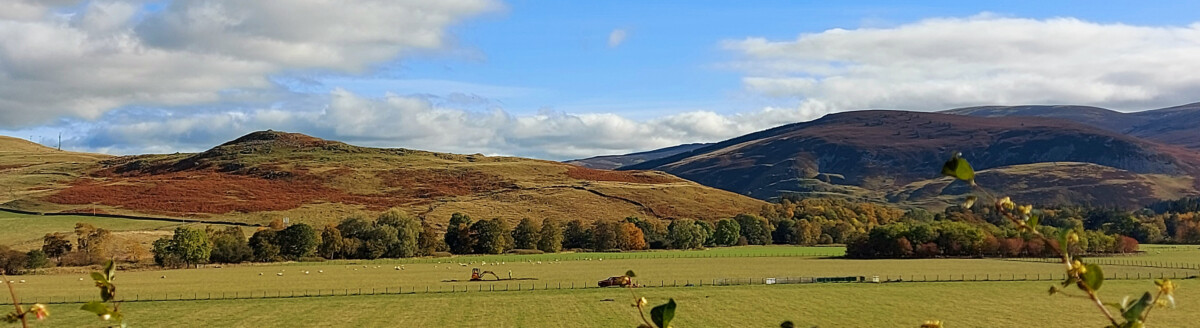
This experience was completely different to our initial archaeological volunteering stint. That saw us climb a steep hill fort every day for 2 weeks in the scorching summer heat, digging stones, stones and more stones! We could see the fields of dig 2 from the hill – and the hill from the fields!
Our second week saw us dig a very much older burial site.
Pieces of pottery discovered on the second day pointed towards old Bronze Age. Fragments of burnt human bone began to appear along with more pieces of pot – or urn. A little pit, outside the circle of stones was found along with more pieces of cremated bone.
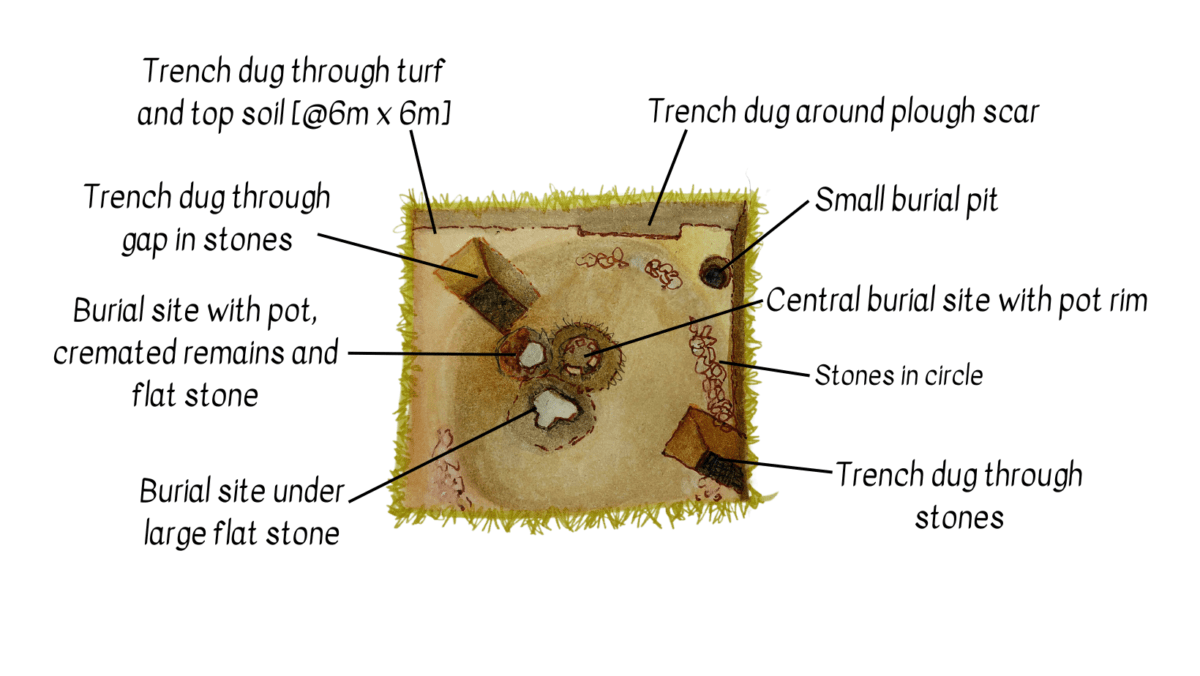 A broken central rim/ring of pot (of a burial urn) was carefully removed, intact in a block of earth [below]. A large stone was lifted to reveal a round ‘cluster’ of cremated bone. If, as suspected, this is a Bronze Age burial site – this person was cremated over 4000 years ago. That was quite something to get my head around…
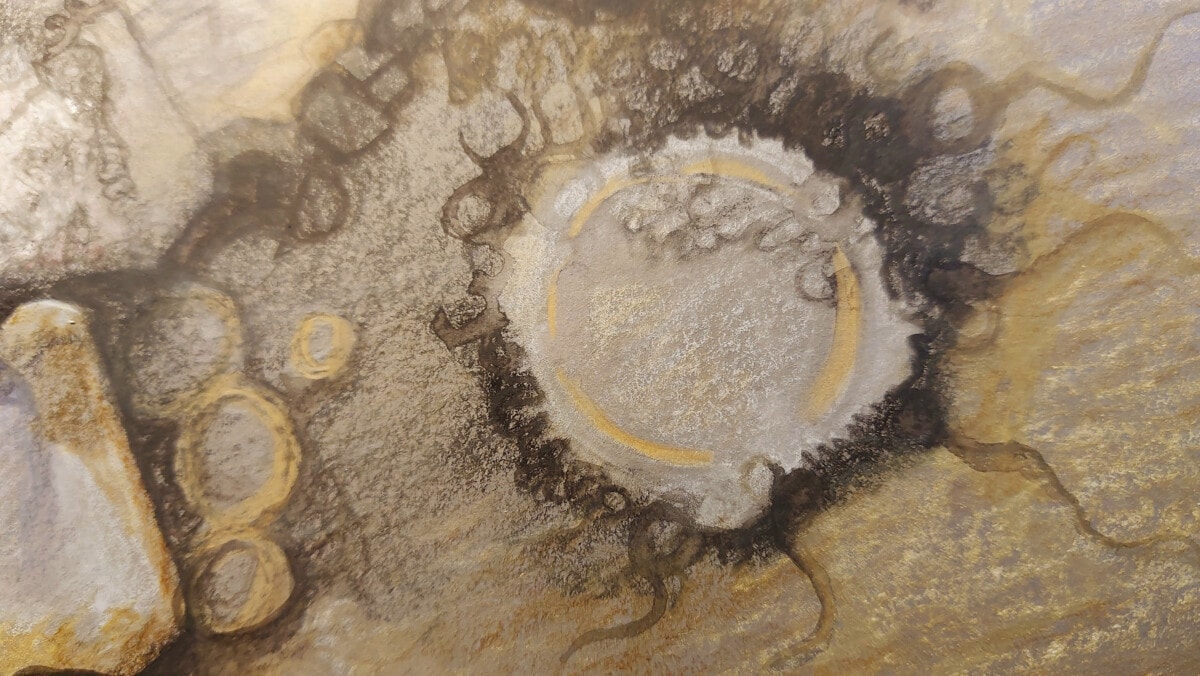
On the last day, the forth burial site – which had revealed large pieces of pot and more bone – was cleared to uncover a second large flat stone [drawing below].

Time was against us, as this would all need to be properly recorded if lifted. So it was left intact… There was a hollow void beneath it – you could hear it when trowel hit stone. It was thought that there would be at least one other burial beneath the stone.
We were all given the opportunity to lift some of the pottery pieces. Aged around 4000 years. This wasn’t an everyday happening. I felt quite overwhelmed. We were the first people to see and touch these pieces of pottery for four – thousand – years.

There was an element of excitement around the finds, but these were tempered, for me, by other emotions.

The burials were around 2000 years the other side of the man-made line. These stones and remains hadn’t been intended to be unearthed – no matter how many years later.
‘Rest in Peace’ – a fellow volunteer observed.
Though I couldn’t help feeling intrigued, it felt somewhat voyeuristic. The cremated remains had been exposed and felt vulnerable to me.

Thoughts provoked and issues raised
Was it thoughtless, disrespectful, wrong to disturb?
Another volunteer commented that perhaps we should show more respect for people when they are alive.
The issue of separating remains can apparently cause heated discussion amongst archaeologists. Of course there is the whole purpose – the side of research, the finding out, putting together, placing things in time and place. I hadn’t thought about any of this until the bag of loose bones was separated from the remaining compacted bones. Some going to aid research and analysis, the others remaining in situ…
A person halved, or helping?
I can’t pretend that I’m not going to be really keen to find out the results of the carbon dating and other analysis – how it will all fit together. The pot/urn will be reconstructed which will certainly be phenomenal to see!
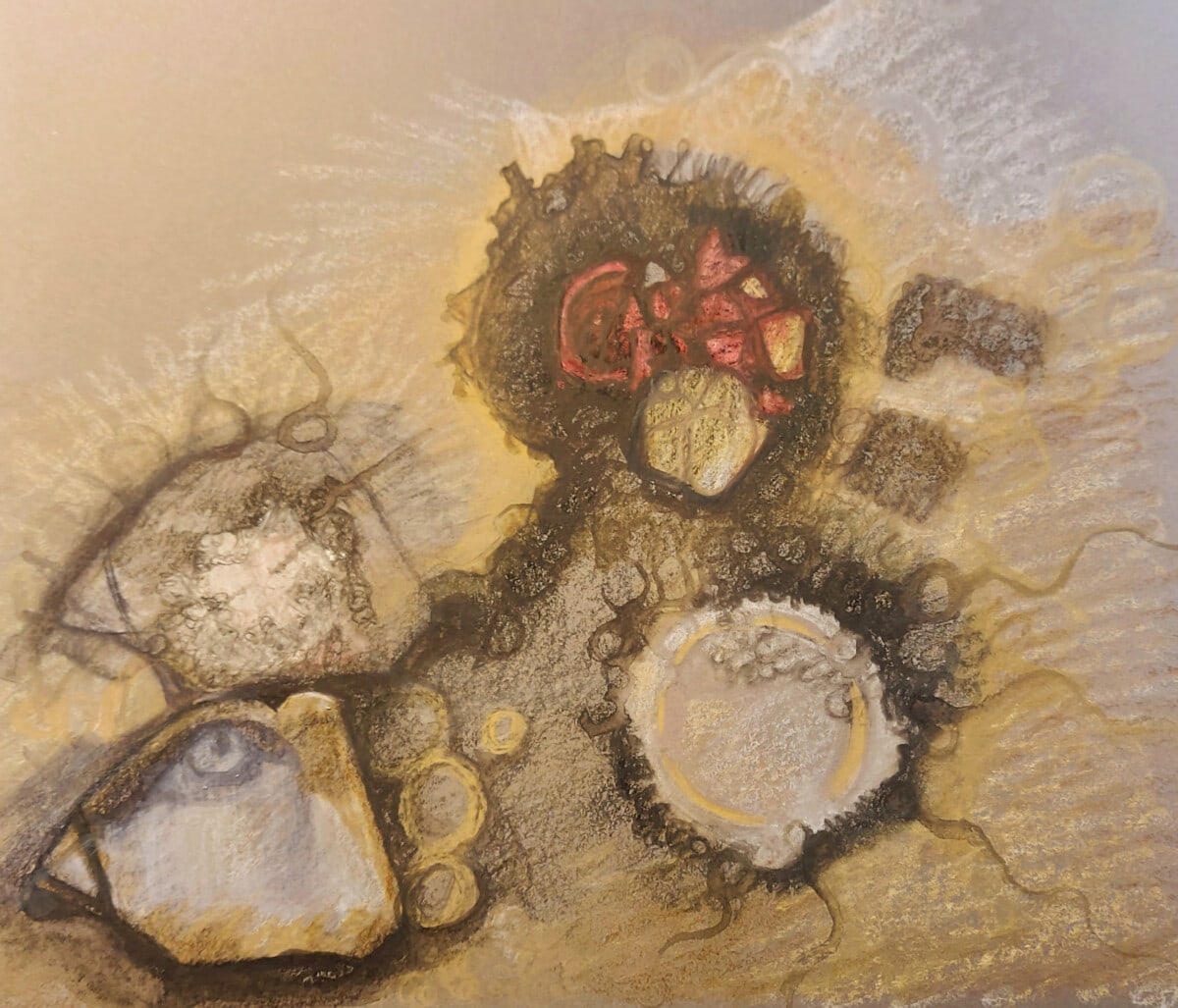 It was odd to come home and wash the mud from our clothes, hair and beneath fingernails. The memories will remain – of the incredible experience, the wonderful people as well as of the inspiring finds.