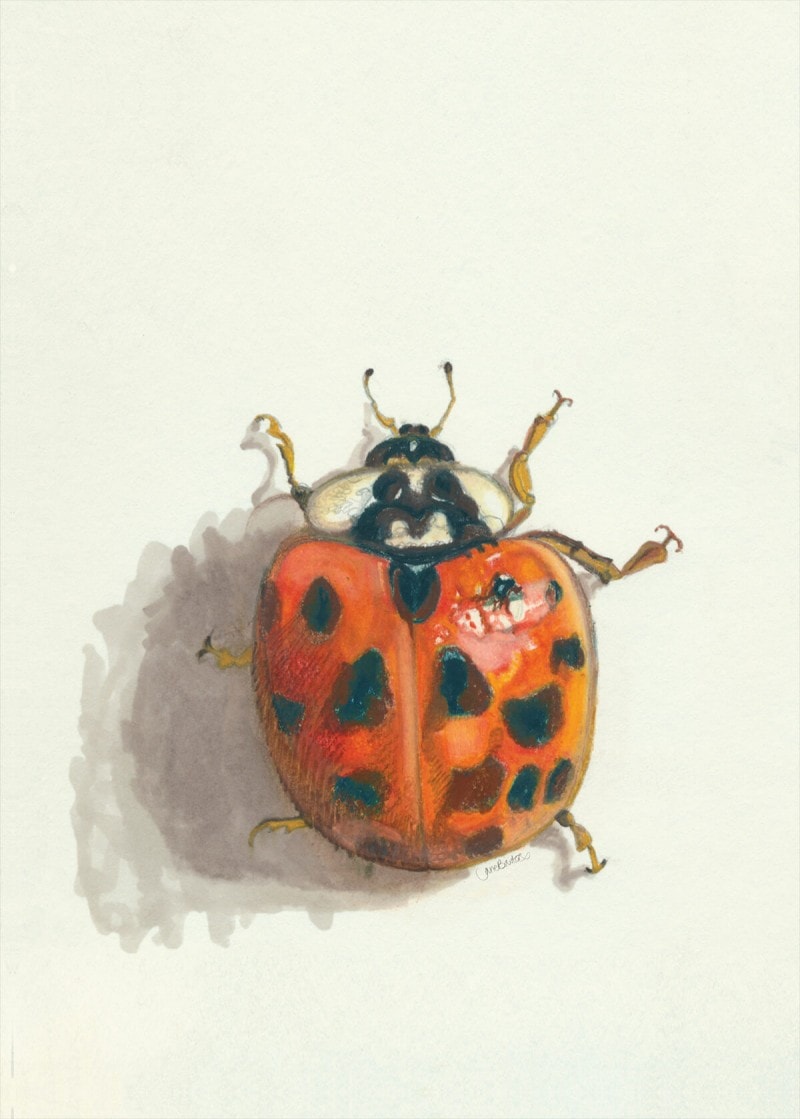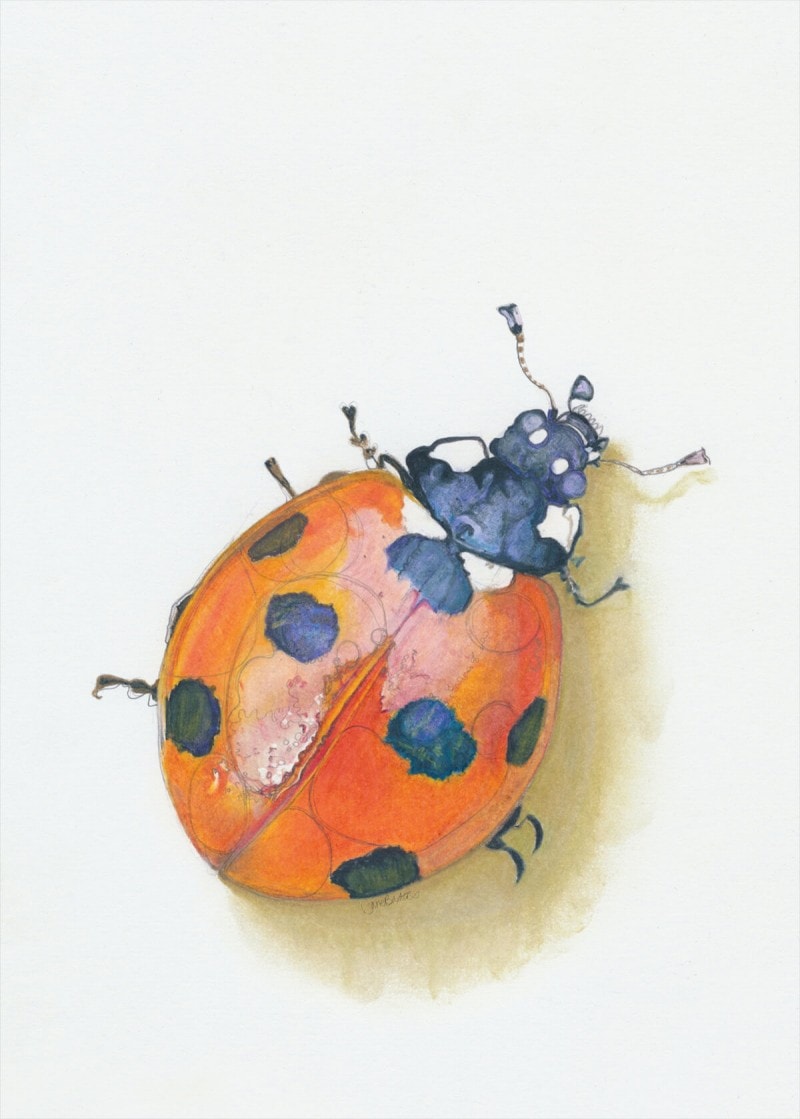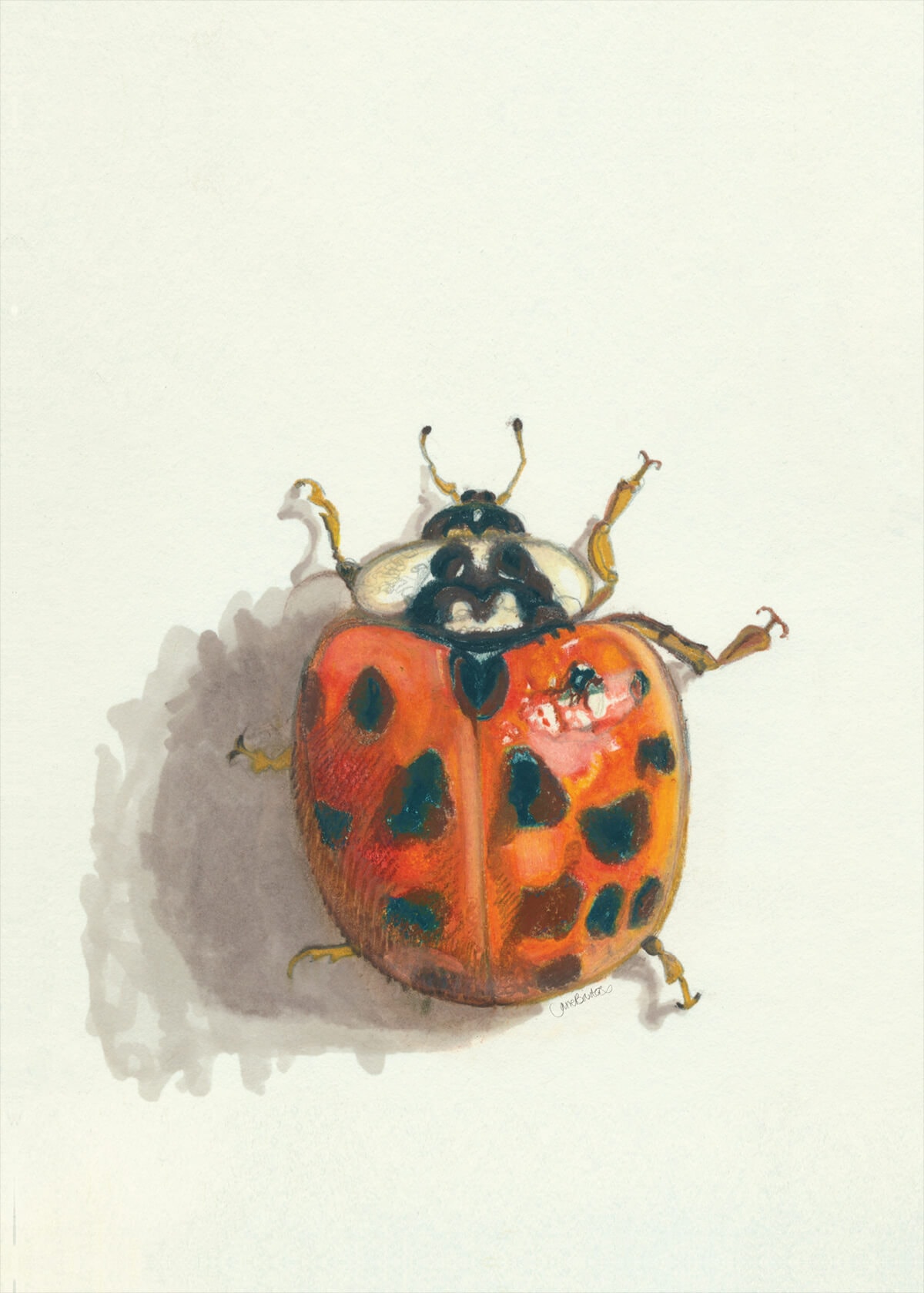
A Harlequin ladybird.
Invader, intruder, imposter!
Having said that, this one did make for very good subject matter!
It was not long after the new year, the fire was on and the sitting room cosy, when something caught my attention out the corner of my eye. I could drag this out for a bit, but I think you now what’s coming next!
Yes! A harlequin ladybird!
I instinctively knew it was, though I hadn’t seen one before.
I still did a fair old search online and took photos with a ruler (for measurement purposes, not as a multi-purpose camera device…) and then sent in an iRecord. I asked for advice in a local Facebook wildlife group, and that led to me joining a ladybird group! There is a group for everything!
They suggested that as they are so widespread now, one more harlequin wouldn’t make a difference.
A moth friend (a friend who loves moths, not a friend who is a moth, though I would like one of those) advised that if she has to ‘dispatch’ of moths, she first puts them in the fridge to slow down their metabolism, and then into the freezer… She hadn’t heard of many harlequins being in the area at all.
I don’t kill things, even things I don’t like. I did, however, put the copious amount of pet giant-African-land-snail eggs into the freezer years ago, before composting, as I couldn’t live with the prospect of potentially having introduced the creature into the fields and gardens of Dumfries and Galloway.
I’ll let you decide what happened to Harley. . .
There’s some more info on the harlequin on my ‘7 spot’ drawing.
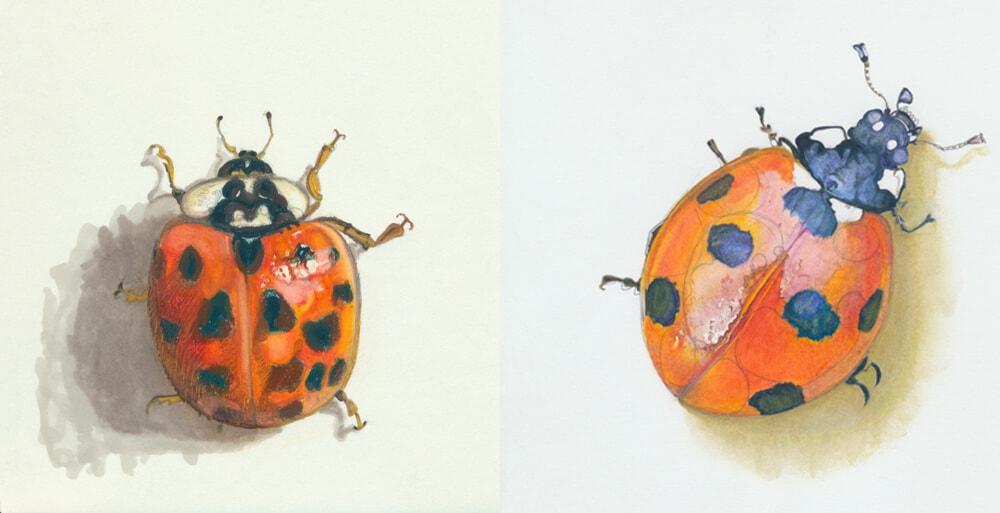
Similar in subject matter, and in drawing materials, both ladybird drawings are quite different in outcome. ‘Harlequin’ is a little looser, with the blacks mostly black. You can compare them below. (For identification purposes, neither are lifesize!). You will note the difference in leg colour though – a defining factor, the harlequin legs are almost always brown. There are so many varying harlequin colours and patterns, but this one and the native 7 spot happened to be similar in tone.
All ladybirds have yellow ‘blood’ which they ooze from leg joints as a foul-tasting deterent when they sense danger. A chemical defence. It can stain, so be aware! Best not to approach a ladybird in a suspicious manner.
I wondered if the yellow blood’s been used, as cochineal (or carmine – the crimson pigment extracted from cacti-dwelling beetles) has. I came across this interesting article which calls this reflex blood an ‘alkaloid (coccinelline)-rich fluid‘.
My semantic antenna are twitching!
Link to ‘Chemical defence in ladybird beetles’ article:
https://link.springer.com/article/10.1007/BF01240660
To go to my ‘7 Spot’ portfolio post, Click Here